Observing Woody over the last few days, especially when he has been at home during the day at the weekend, it’s easy to see his constant frustration. He is absolutely furious that he cannot do the things he wants to do and say the things he wants to say. I was washing up in the kitchen and could hear his loud whining noise in the other room. It’s a high pitched anxiety-inducing noise, often synonymous with toddlers. I heard this noise over and over and thought “what does this remind me of?”.
It takes me back to this time last year when we had endured several months of lockdown and Woody was absolutely desperate to be able to speak. He became really whiney and got angry every time someone else spoke, when they weren’t engaging with him. At the time, it was utterly intolerable but we observed later that, once his speech developed, this whining noise and anger subsided. He could finally say what he had been thinking, after such a long time. A happier, more playful Woody emerged towards the end of last summer (albeit with a smattering of jealousy as his wee sister entered our world).
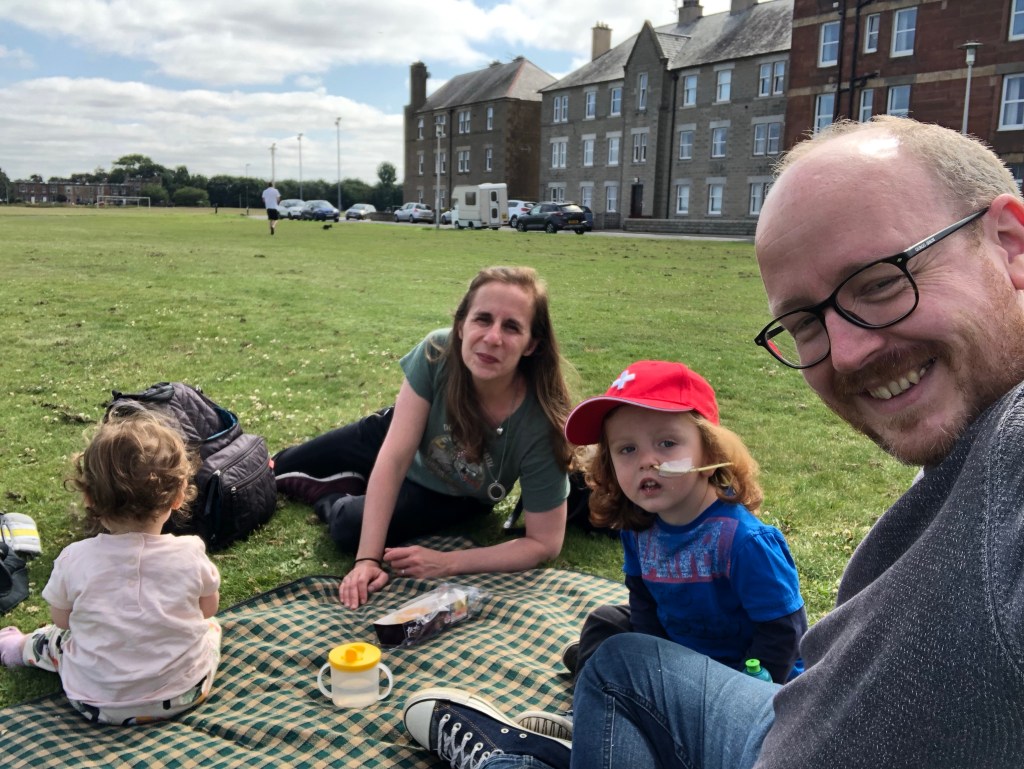
And now, my poor boy has lost his words again – words that he had only just found. On top of that, he has lost the use of his fine motor skills and some of his eye sight. So of course, the frustration is back, tenfold. I believe that Woody’s cognition and intelligence is all there and what has misaligned is all the function that should go with that. (does anyone remember the chocolate game, where you had to eat chocolate with a knife and fork, whilst wearing oven mitts – so very frustrating!).
Thinking about Woody’s whole life so far, I think this has always been the case. His intelligence (especially emotional intelligence) has always been there but he’s not been able to put that into words and actions. I think he’s been trapped inside his own head for a very long time and my belief is that this very rare portosystemic shunt is the main contributor.
I have read more and more about these shunts and how they can affect children. I think it made his jaundice so bad, his cardiac wound infection so bad, his sepsis so bad. And I think it has massively impeded his overall development.
Today, when I collected Robin (11 months) from nursery, the staff were gushing about how she has mastered crawling and wants to talk, and eats so well. Robin has been lucky enough to understand her world and learn her skills in a “normal” way. She hasn’t had the obstacles Woody has had and quite honestly, we haven’t had to work nearly as hard to allow Robin’s skills to flourish. This comparison makes it clear to me that so many of Woody’s struggles have been down to something in his anatomy that we simply didn’t know was there, allowing toxins to circulate around his body and his brain ever since he was born.
Now that we know, I am ready to push with every fibre of my being to get Woody the intervention he needs – to close that shunt and allow him the chance to live and learn as everyone else does. Woody is a fighter, more so than anyone I know, but he deserves his time to just enjoy life, to not have to fight so hard, to bring all his intelligence, wit and spark to the surface, unchallenged. And Stewart and I will be the people to make that happen for him as soon as we possibly can. He has been through enough. And so have I.
I have spent the last three and a half years never being able to shake the feeling that I must have done something wrong as a parent, because Woody couldn’t do this, or that. Life was always about waiting for the next crisis, the next failed assessment and dealing with an angry, frustrated boy who I could not pacify. It’s been the hardest time of my life and, as a family, we all deserve a break from that. We all deserve some calm, happy family time and I will fight for Woody to get this shunt fixed so we can get there. I’m grateful that this defect was found but I will only rest properly when it’s been fixed.
 When We Wake Up